
The city
The town of Weißensee (population around 3,500) is located in the district of Sömmerda and is regarded as a flourishing, growth-oriented business and tourism location in the heart of Thuringia. The incorporated villages of Ottenhausen, Scherndorf and Waltersdorf belong to the town.
Weißensee has always been of particular importance, as the town was geographically located at the crossroads of the salt or copper road running from Nuremberg via Erfurt to Magdeburg and the connection between Eisenach and the Neuenburg in Freyburg an der Unstrut, which was important for the Ludovingian territory.
The town of Weißensee was founded around the year 1200 by the Ludovingian landgraves of Thuringia and is one of the most important town foundations in Thuringia in the 12. and 13th century. The starting point for the development of the town was the enormous castle complex of the landgraves, which was soon to become the center of Ludovingian power. Along with the castle, the first settlement with the parish church of St. Nikolai grew up on the eastern shore of the Weißer See. The actual town was founded with the town hall and the town church of St. Peter and Paul to the east of the castle.
Mentioned in documents as early as 1174 as “wyssense”, Weißensee received its town charter on March 14, 1265.
The founding of the city
Hardly anyone today has any idea of the historical significance of the small Thuringian town of Weißensee in the High Middle Ages when they walk from the Romanesque town hall through the tranquil old town. Yet there is certainly no comparable place that can unite Thuringian history in such an authentic and legendary way – and all it takes is a short walk around the market of around 700 meters.
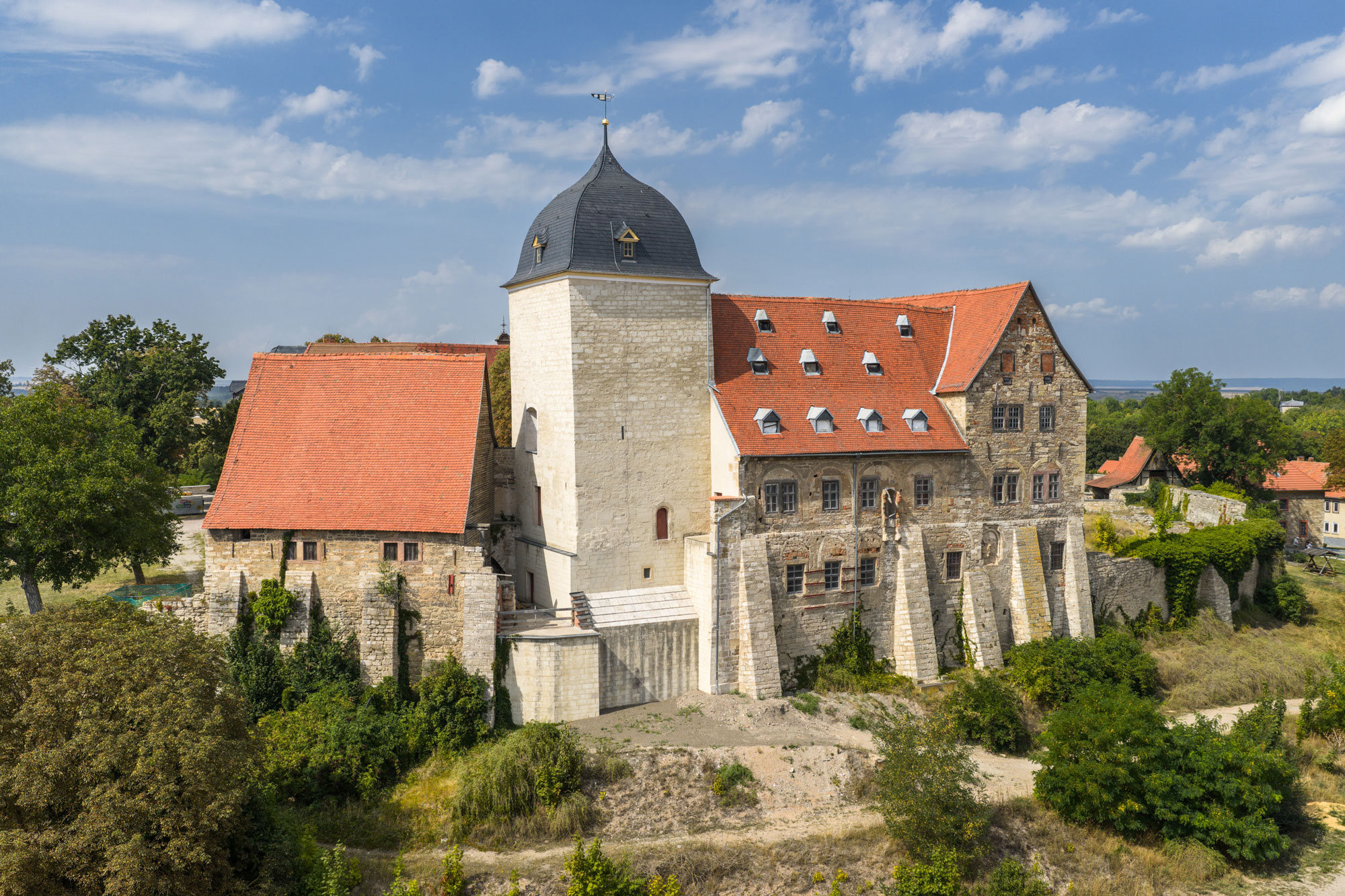
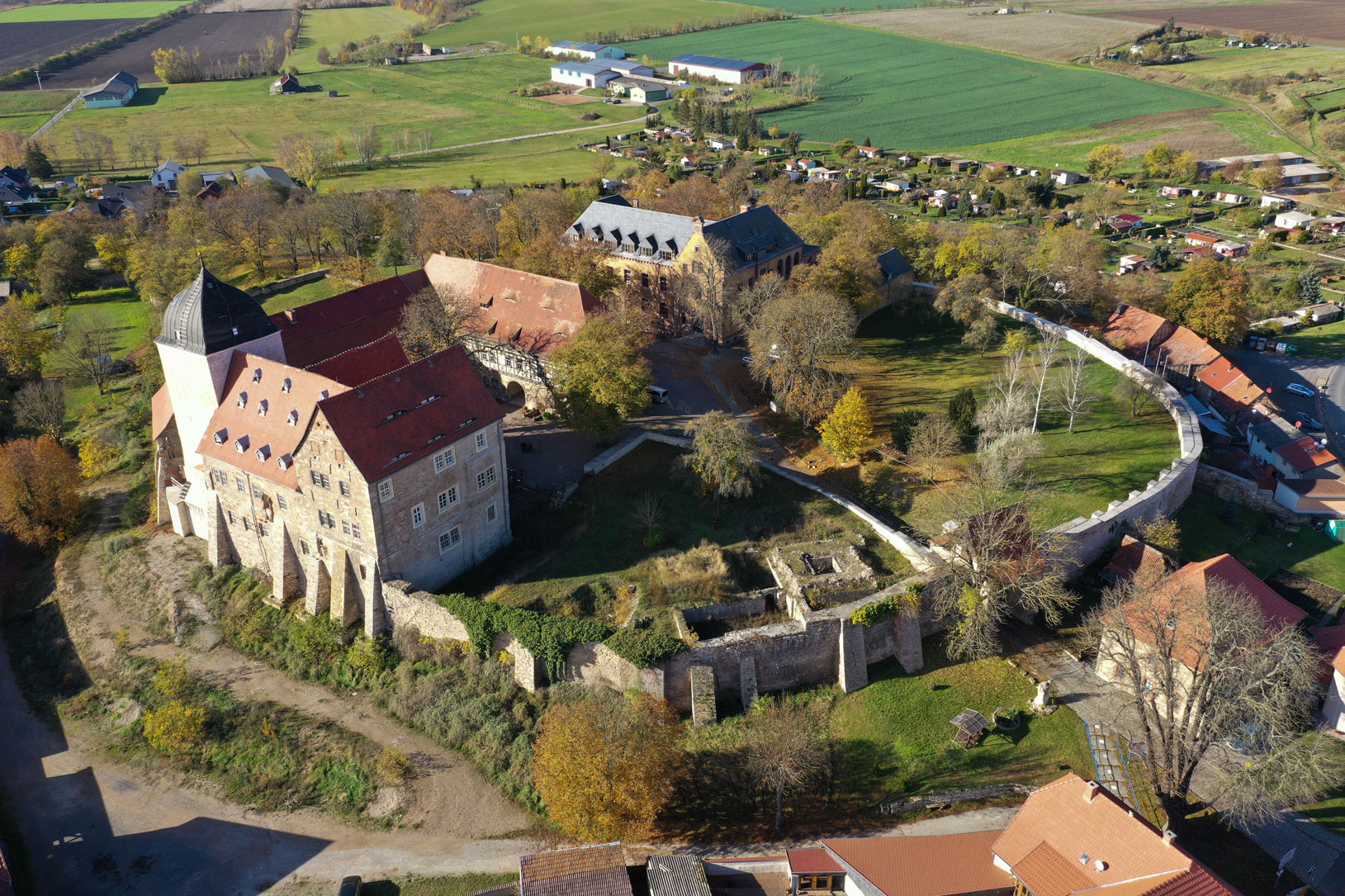
Weissensee Castle, also known as Runneburg, is a stone testimony to courtly power. The first buildings date back to 1100. The magnificent residence flourished from 1168 under Landgravine Jutta, wife of Louis the Iron and sister of Emperor Frederick I Barbarossa.
The town of Weißensee, described by chroniclers as the “hercze zu doringen”, was developed according to plan and was of enormous strategic importance to the Thuringian princes. This is evidenced not only by authentic records of battles and sieges, but also by the proven presence of Saint Elisabeth of Thuringia and medieval minnesong superstars Walther von der Vogelweide and Heinrich Hetzbold von Weißensee. There is also room for legends and fairy tales here, because at the time of the miracle of the roses, Weißensee was one of the most central places of activity of the Order of St. John, which gave its name to large aid organizations for its care of the sick and needy for good reason.
The Romanesque town hall
The Romanesque town hall of Weißensee is the oldest town hall in Thuringia and one of the oldest in Germany. First mentioned in 1351, it has been standing for much longer. The substance of a representative Romanesque stone building from around 1200, which served as the residence and official residence of the market master, can still be seen today between the 15th and 16th century extensions.
The prerequisite for Weißensee becoming a town was the granting of market rights. The mention of a market master for the year 1198 proves that such an official was in charge of the Weißensee market. Probably the oldest seal of a Ludovingian town in Thuringia has also been preserved from this market master.
The romantic ballroom of the town hall has been a popular venue for weddings for over 400 years.
The Runneburg
Weißensee Castle – also known as Runneburg – is considered one of the most important Romanesque secular buildings in Germany. Its origins date back to 1168 and the Thuringian Landgravine Jutta. At a strategically important location halfway between the western center of power around Wartburg Castle and the eastern territory around Neuenburg Castle near Freyburg an der Unstrut, Weißensee subsequently became a mainstay of the landgrave’s territorial policy. The dominant feature of the castle buildings is the high medieval complex of five-storey palace tower, palas and curtain wall.
The church of St. Nikolai
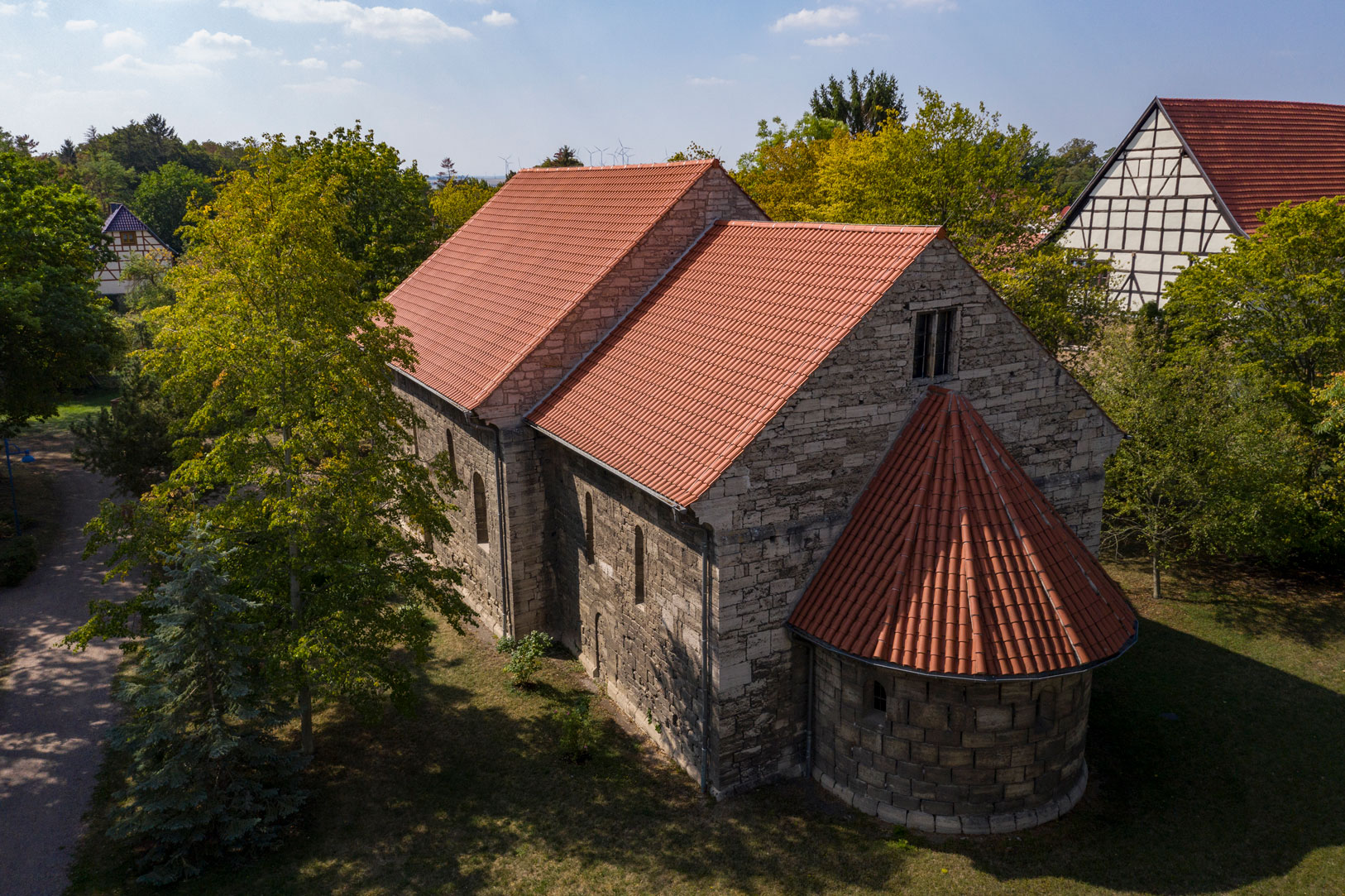
The church of St. Nikolai from the second half of the 12th century is one of the largest Romanesque hall churches in Thuringia. It served as a place of worship for the fishermen and farmers of the first urban settlement. After the Reformation, the church was only used on a temporary basis. The west tower was demolished around 1600 and the building material was used to rebuild the church of St. Peter and Paul. In the years 1932 – 34, restoration work was carried out under the Prussian restorer Prof. Adolf Zeller. Today, St. Nikolai, which is bordered by a wall with a late Gothic gate, is the church of the Protestant community.
The town church of St. Peter and Paul
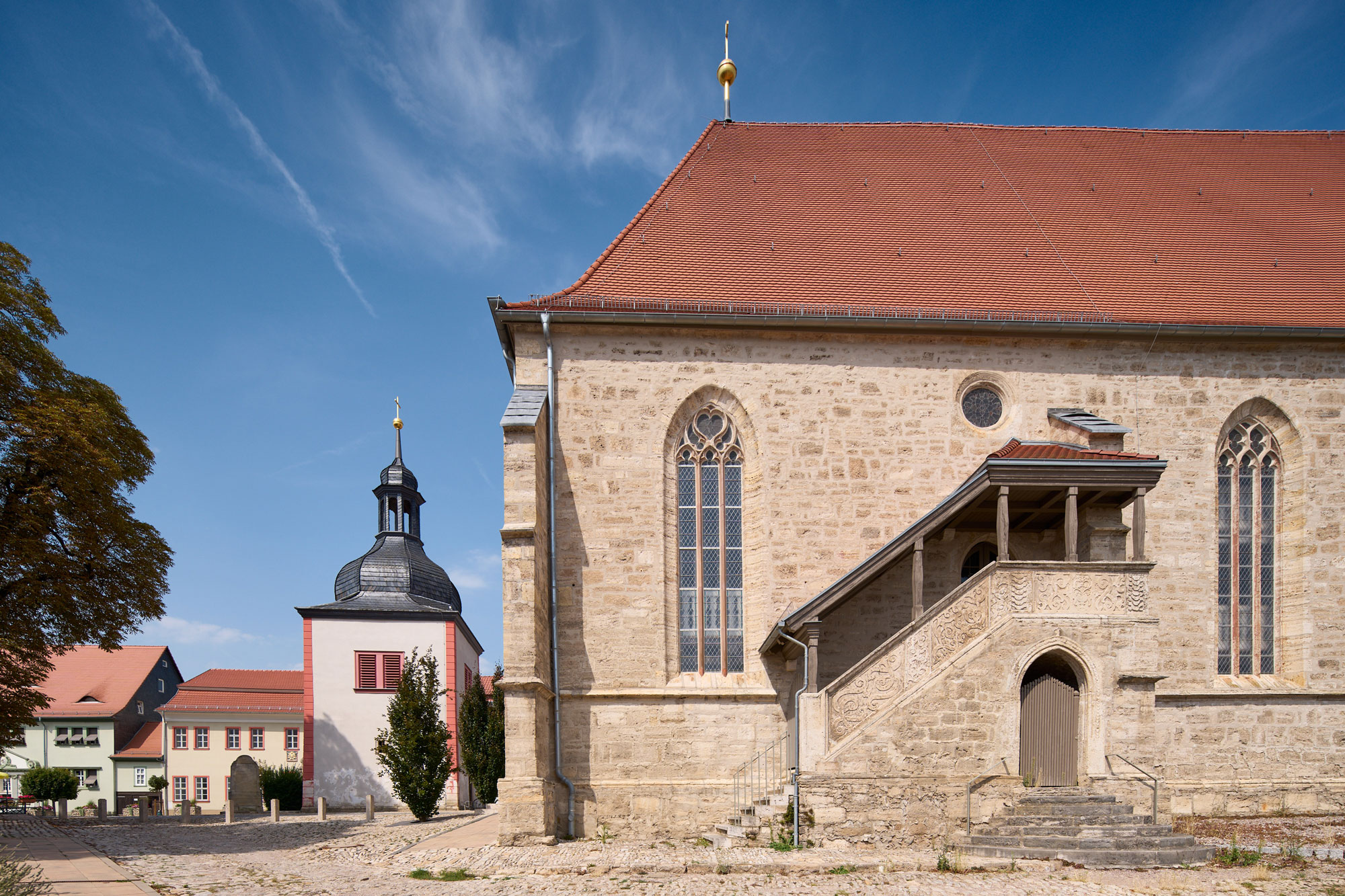
The town church of St. Peter and Paul stands at the highest point of the town. Built around 1180 as a three-aisled basilica, it was given a high Gothic choir in 1331 in the course of various renovations. Its enormous dimensions can be explained by the active presence of the Order of St. John in the town. The patronage of St. Paul was not added until 1463.
In 1737, the baroque organ in the town church was given a new organ by Conrad Wilhelm Schäfer from Kindelbrück. The organ was tested – and this is historically documented – by Johann Sebastian Bach on December 16, 1737. A further test by Bach, then “Hochfürstlicher Capellmeister von Haus aus”, took place on July 21, 1738.
The town church of St. Peter and Paul is currently being revived in its medieval splendor. So it is no wonder that the remains of “Good Conrad” have been found and reburied there. Conrad was the son of the burgomaster Berld von Sumerd. The 16-year-old is said to have been abducted to a vineyard hut in 1303, martyred there and then hanged from his own belt. This was followed by a persecution of the Jews, during which around 125 people were murdered at Weißensee Castle. The “Good Conrad” was then venerated as a saint for around 200 years before he fell into oblivion again.
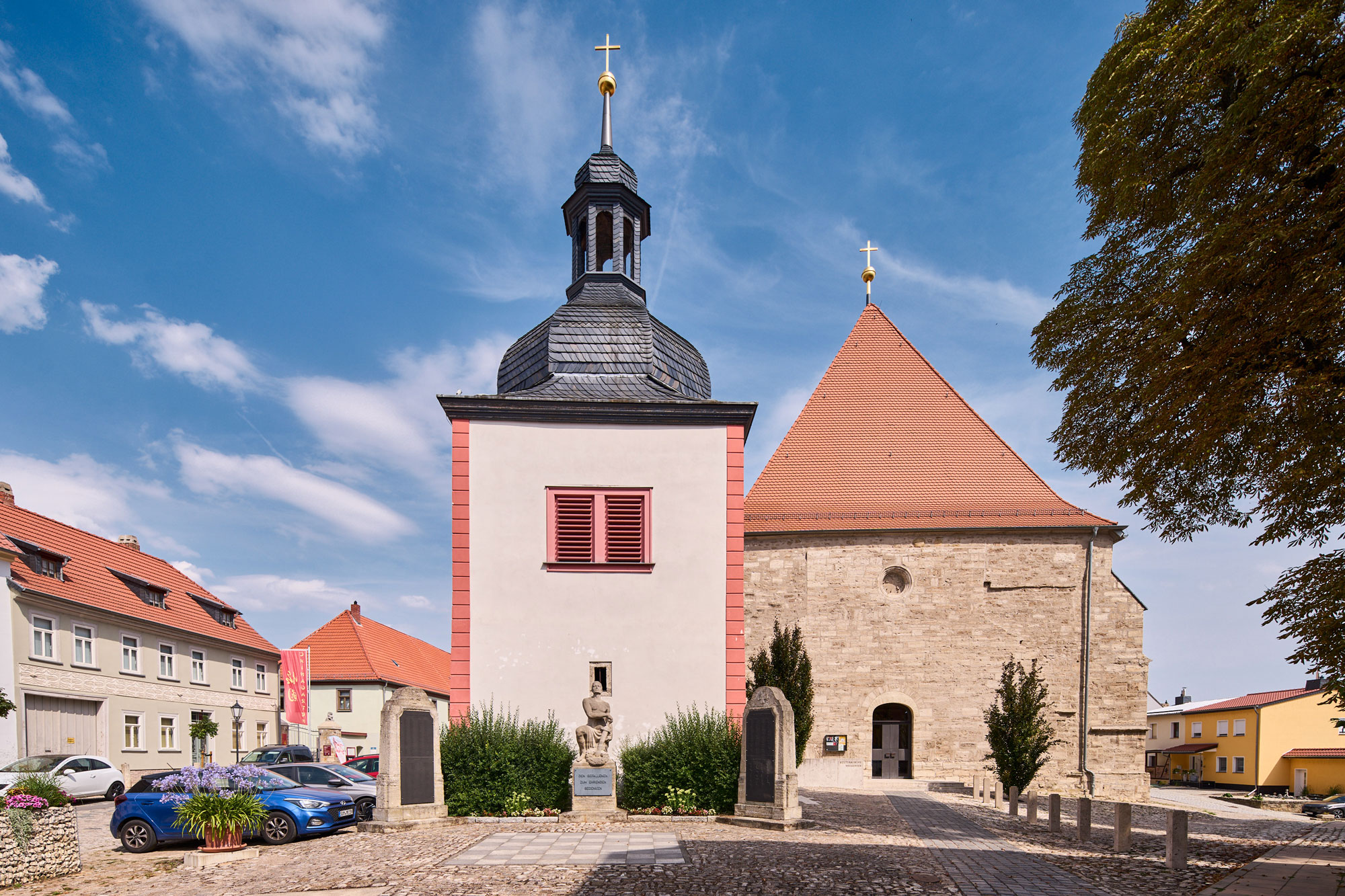
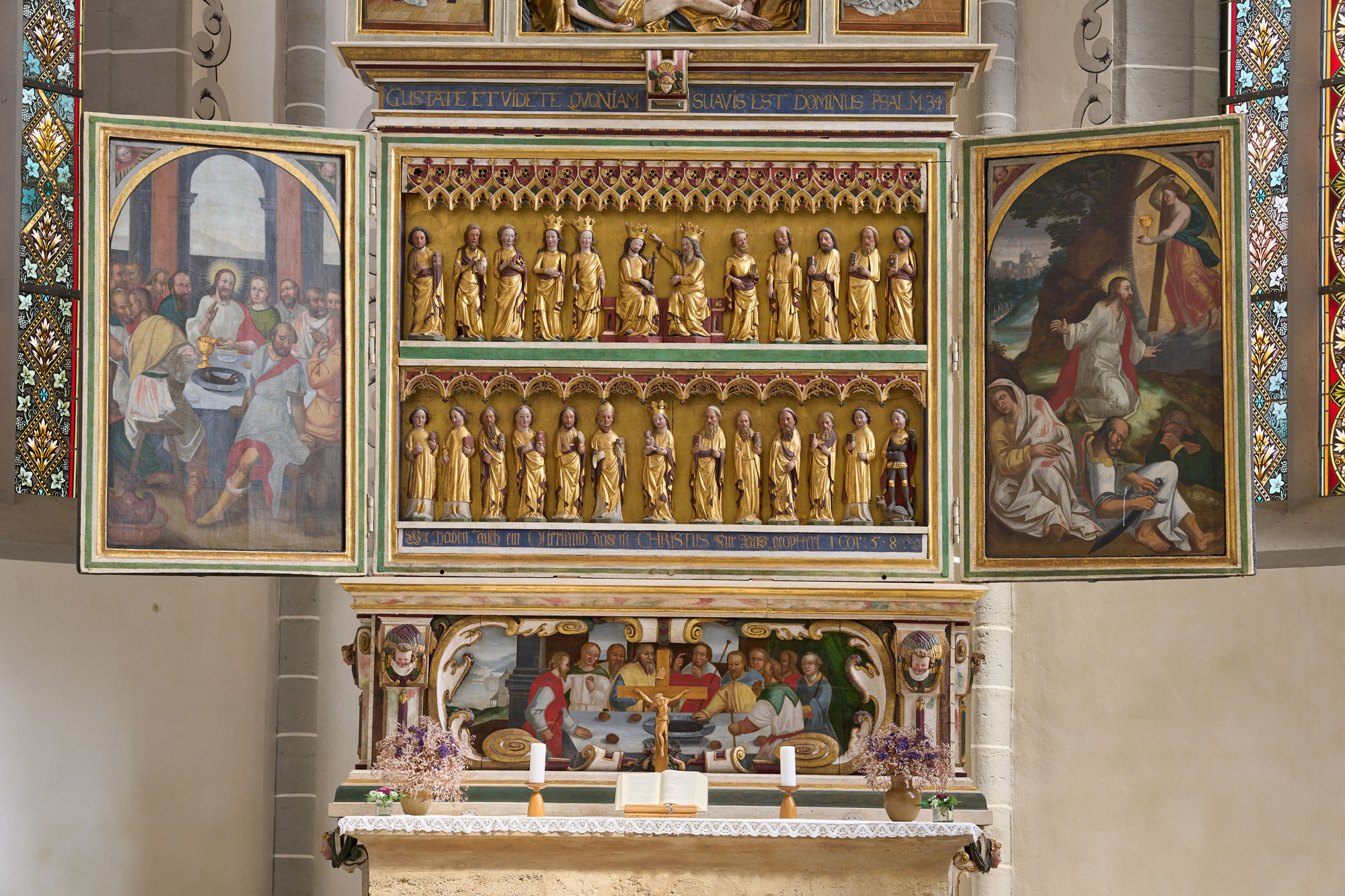
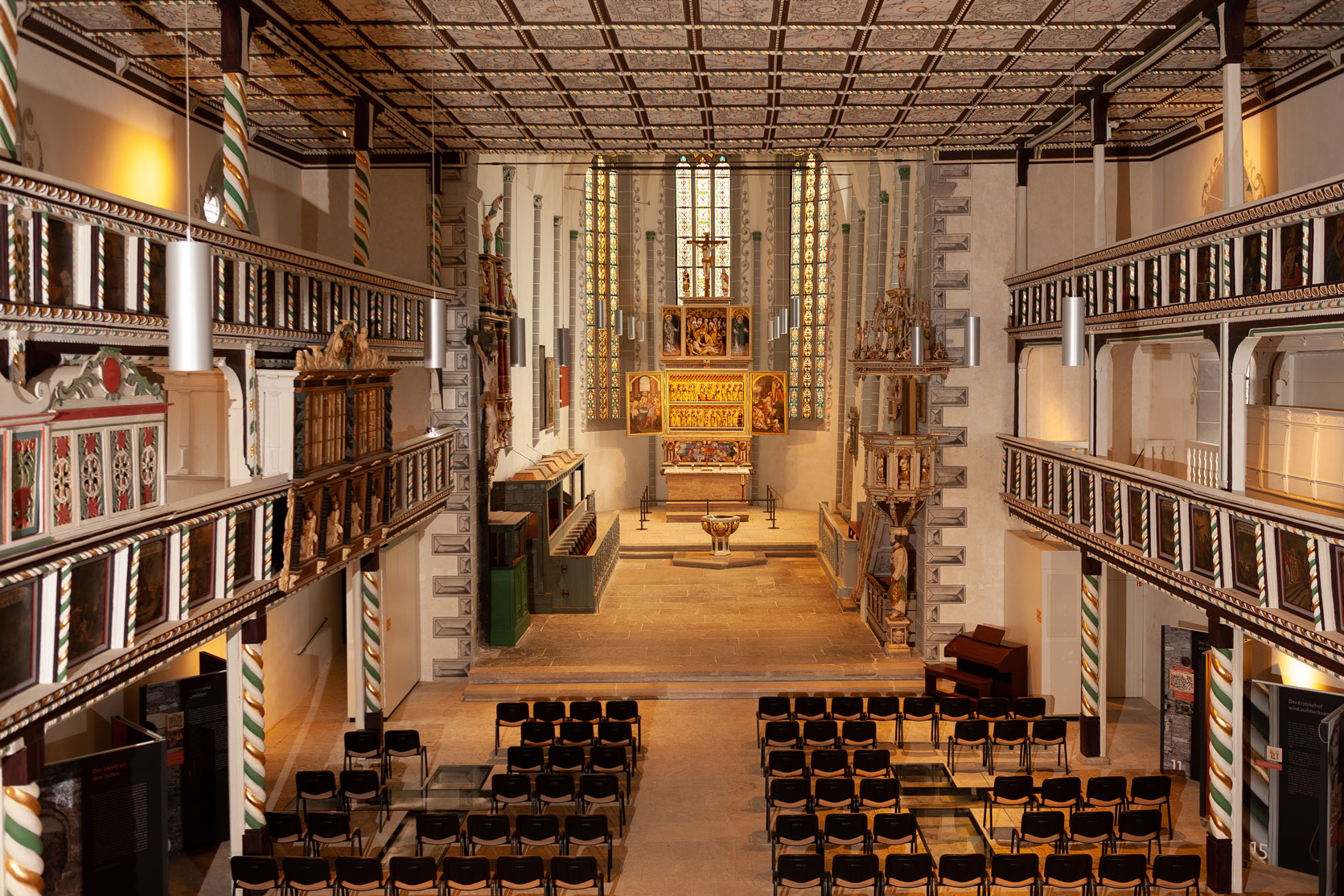
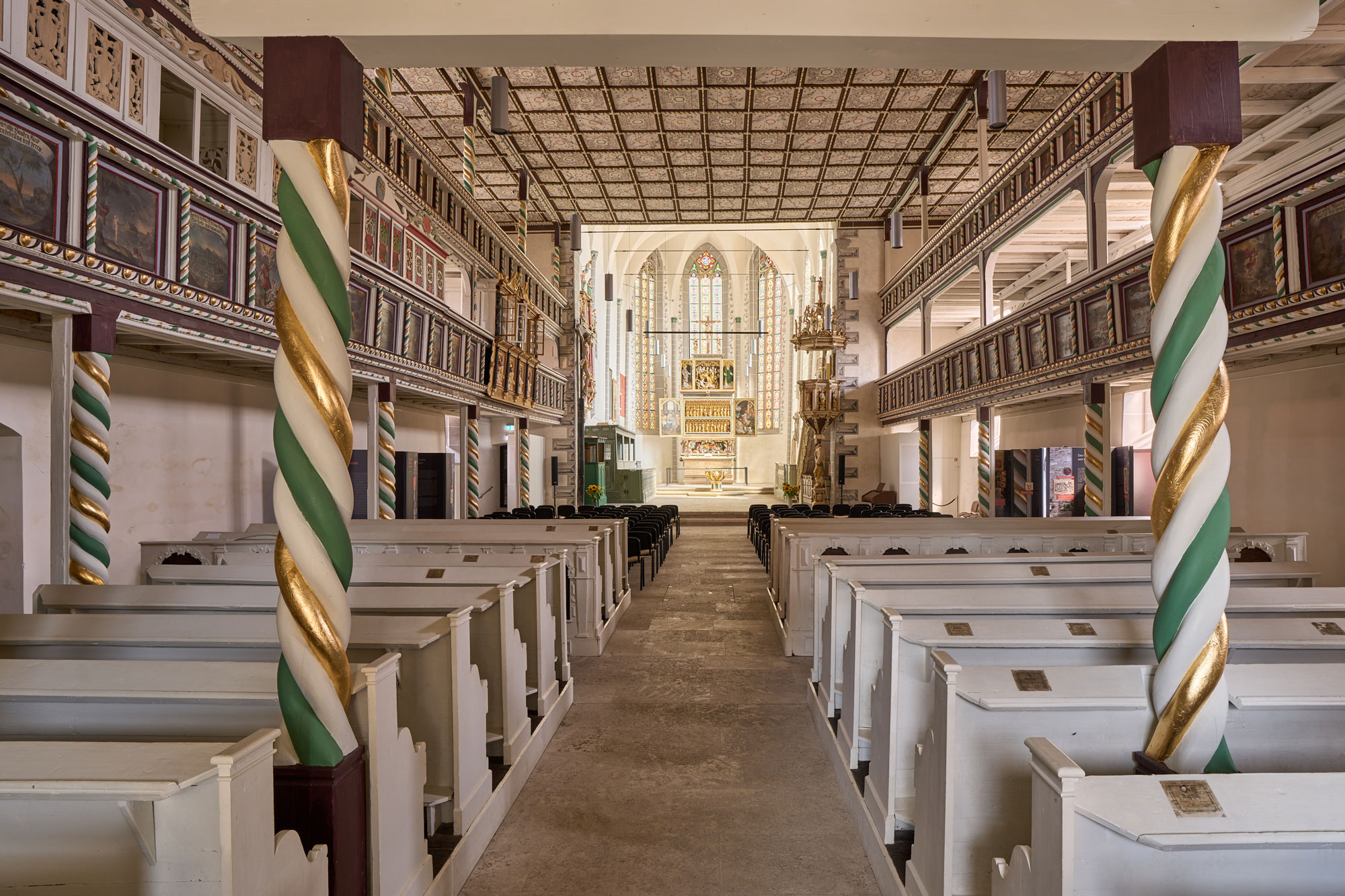
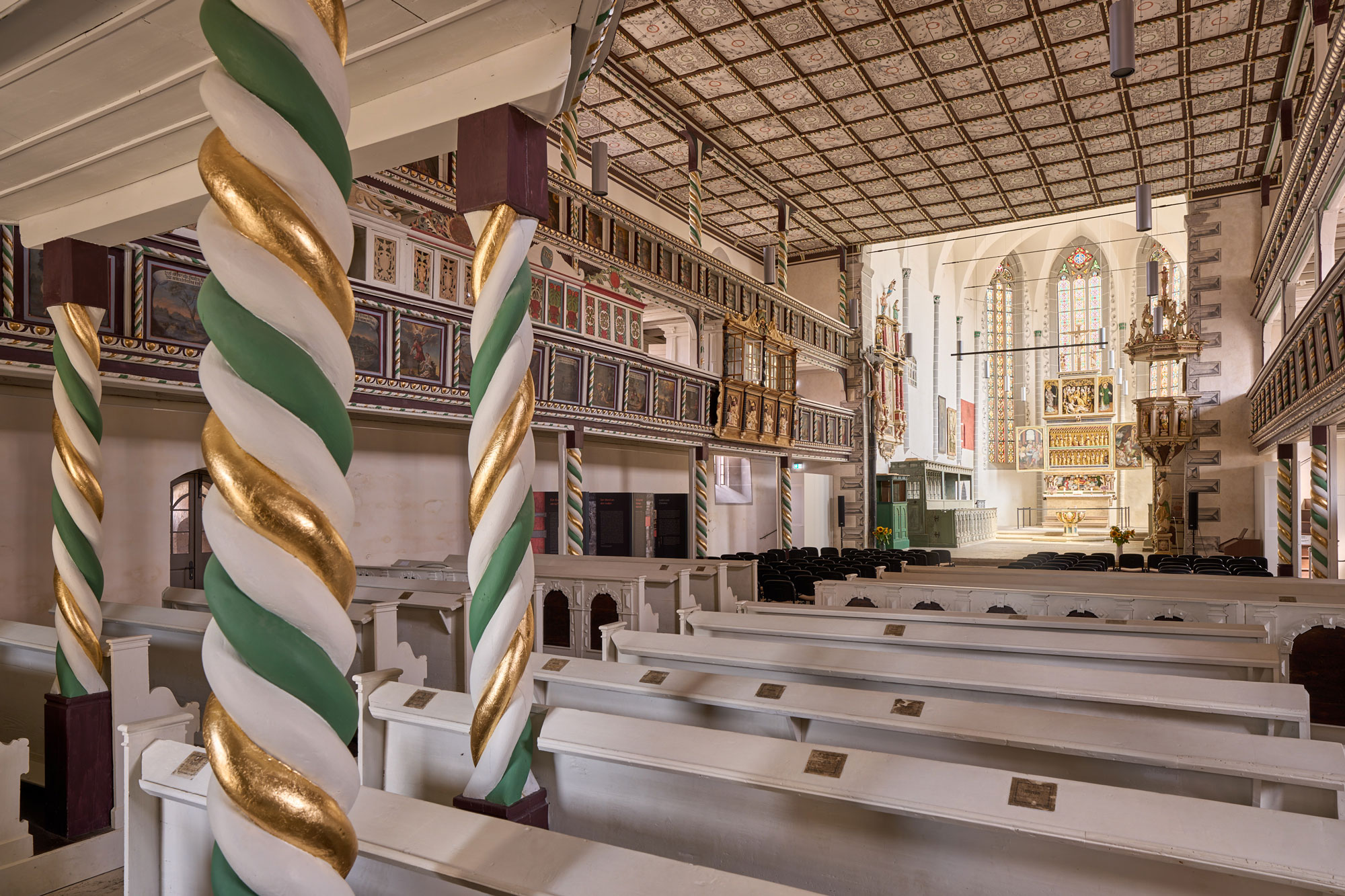
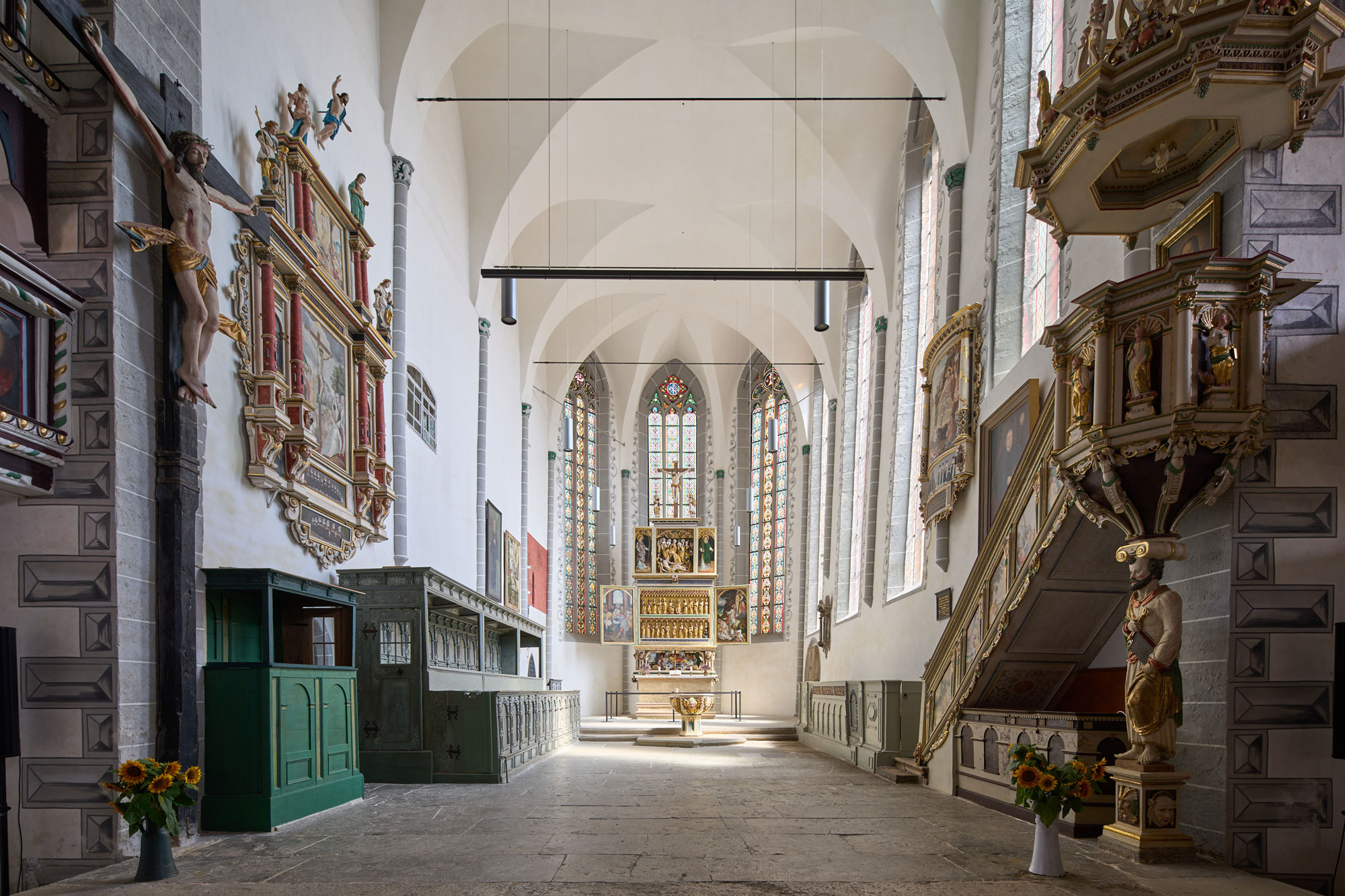
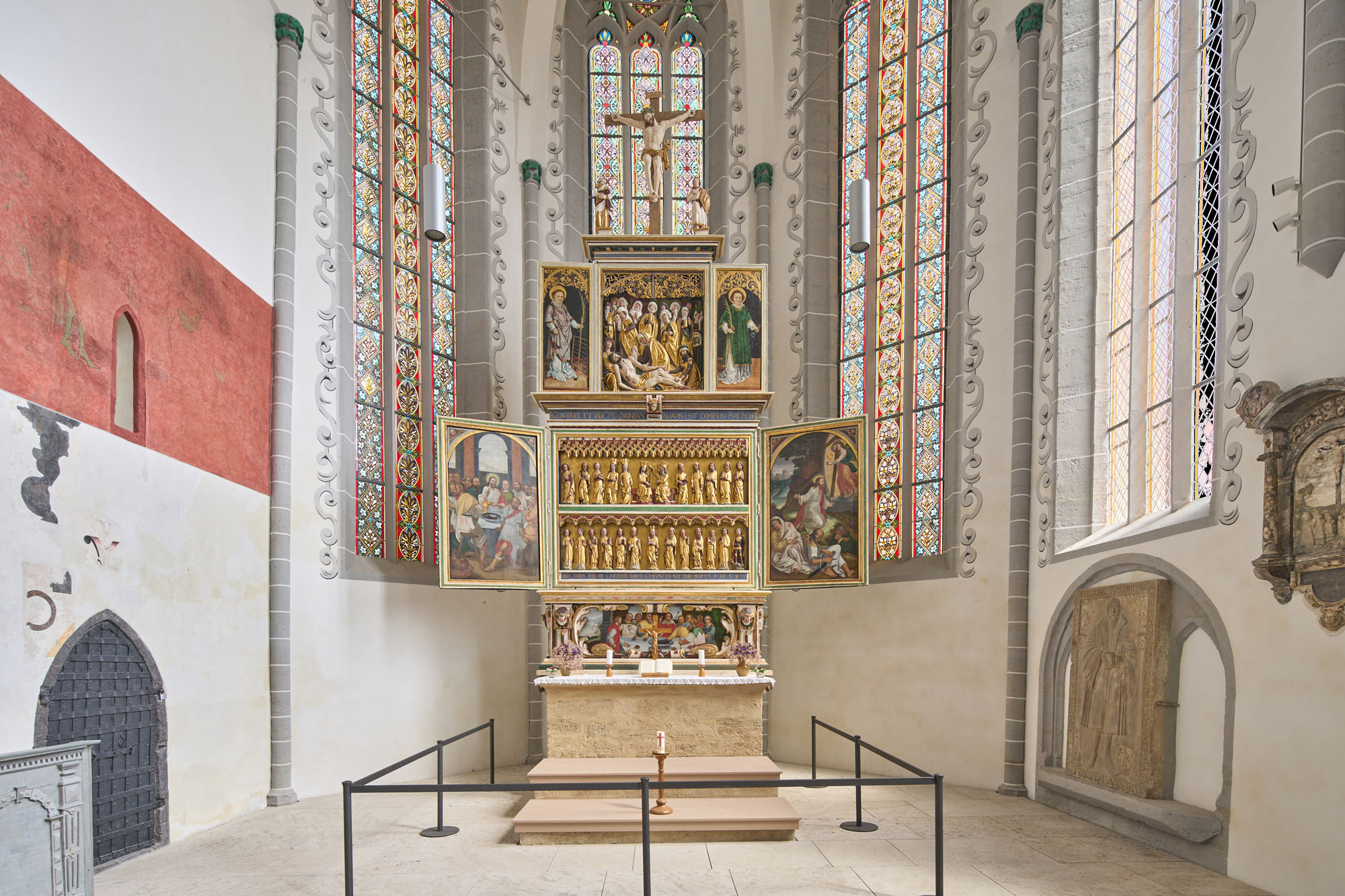
Open cultural church of St. Peter & Paul
The Kulturkirche St. Peter & Paul in Weißensee has now been extensively renovated and restored. Since June 12, 2015, the church has been open to visitors from April to October (during the opening hours of the Chinese Garden). Admission is free.
There is also a permanent exhibition consisting of 24 information panels. Church historian Dr. Hartmut Kühne (Wandlitz) and former archive director Dr. Johannes Mötsch (Meiningen) offer an insight into the history that began 700 years ago and continued until the Reformation with this panel exhibition.
The purity law of 1434
The first German municipal beer purity law was laid down in 1434 in the Thuringian town of Weißensee. In the “Stat Book” of 1434, a “Statuta thaberna” was discovered, which summarizes the laws on conduct in taverns and the brewing of beer. It reads: “When brewing beer, one should … nothing other than hops, malt and water (‘hophin malcz und wasser’).”
The Romanesque town hall in Weißensee is home to a small private brewery. Visitors can enjoy the “Weißenseer Ratsbräu” in an atmospheric setting and learn interesting facts about the art of brewing beer.
In memory of the Purity Law on beer brewing from 1434, the “Weißensee Beer Festival” has been celebrated every year in Weißensee at Whitsun since its discovery in 1998.
The Diet of 1446
First Thuringian constitution
Thuringia owes its first constitution to William III the Brave (1424-1482). On 9 January 1446, a specially convened state parliament in Weißensee adopted the first Thuringian state constitution, which in essence has the status of a state constitution that is common today.
The state parliament of 1446 is commemorated as the forerunner of modern parliamentarianism in Thuringia and as the founding assembly of a Thuringian constitutional tradition that now goes back over 550 years with the “Day of the Brave” held annually in January at the Historic Town Hall in Weißensee.
The Order of St. John
Opposite the town church of St. Peter and Paul is the Johanniter-Ordenshof. The oldest existing document mentioning the Knights of St. John in Weißensee dates back to 1234.
The friars cared for the poor and sick and held services in the town church, which was connected to the courtyard by a bridge.
In 1539, Henry the Pious introduced the Reformation to the town. As a result, the Knights of St. John, who had to remain Catholic according to the rules of the order, left the farm. It was not until 1774 that a knight of the Order of St. John, Baron von Forell, was once again granted use of the farm, which continued until 1803.
Today, the site is home to the Chinese Garden, which attracts thousands of visitors every year.
The minstrels of Weißensee
Weißensee was famous in the Middle Ages for its minstrels. One of its greatest patrons was Landgrave Hermann I of Thuringia (1190 – 1217). It is no wonder that Walther von der Vogelweide, who wrote his famous “Meissen Proverbs” before Weißensee, praised Hermann as the “flower of Thuringia”, which even shines in the snow.
The historically attested presence of Hermann I in the “castrum wiszense” makes the castle and town of Weißensee a venue for medieval poetry. However, Walther von der Vogelweide was only one well-known representative of his art. Wolfram von Eschenbach, who mentions a trebuchet in his “Willehalm”, and Heinrich von Veldeke can also be imagined in Weißensee.
Weißensee itself also produced famous minstrels. For example, the “virtuous scribe” mentioned in the Singers’ War is a ministerial named Heinrich von Weißensee. Another singer is Heinrich Hetzbold von Weißensee, who was bailiff at Runneburg Castle. Hetzbold is mentioned several times in documents between 1306 and 1345. His name (Hetzbold = the hunter) is associated with hunting, as a miniature in the Great Heidelberg Song Manuscript (Codex Manesse) shows. Another Weissensee minstrel could have been the “Düring”, who is also recorded in the Codex Manesse.
The Saxon Helbe
Despite two lakes around Weißensee, it was particularly difficult for the inhabitants of the higher-lying upper town to obtain a sufficient supply of water. For this reason, a canal system was built between 1378 and 1385 and the almost 19-kilometre-long ditch was cleverly designed so that the small difference in height of just 15.5 meters between the weir at Westgreußen and the point of influence into the town could be fully utilized. For this purpose, a 250 meter long and 16 meter high dam had to be built in the north of Weissensee. Due to the minimal gradient, the water needed a full 24 hours to cover the distance.